

 App Store
 Google Play
Visio Divina: Praying With Sacred Art


Some people pray best with words. Others pray best with their eyes. Visio divina, Latin for “divine seeing,” is a way of praying with an image, usually a piece of sacred art, an icon or a photograph, and letting God speak through what you see.
It’s a close cousin of lectio divina, the ancient practice of praying with Scripture. Instead of reading a passage slowly, you gaze at an image slowly. This guide explains the steps of visio divina, suggests some classic visio divina images to begin with and offers a short guided practice.
One thing I have asked of the LORD; this is what I desire: to dwell in the house of the LORD all the days of my life, to gaze on the beauty of the LORD and seek Him in His temple.
Psalm 27:4, BSB
What is visio divina?
Visio divina is a contemplative way of praying with images, a form of art meditation rooted in Christian tradition. Praying with art is nothing new: Christians have done it for centuries. Stained glass windows told the Gospel to people who couldn’t read. Eastern Orthodox Christians pray with icons, which they sometimes describe as “windows into heaven.” Medieval monks illuminated manuscripts as acts of worship.
The modern practice of visio divina adapts the four movements of lectio divina for images. It’s used by Catholics, Anglicans, Orthodox and many Protestants. You don’t need any art training. You simply need time, attention and openness to God.
Visio divina steps
1. Prepare
Choose an image. Sit comfortably, take a few slow breaths and ask the Holy Spirit to guide your prayer.
2. See (visio)
Look at the whole image for a minute or two. Let your eyes wander. Don’t analyze it yet. Simply notice: colors, shapes, light and shadow, faces, gestures.
3. Gaze (meditatio)
Notice where your eye is drawn and stay there. Ask yourself: What do I feel? What memories or questions come up? Why might this detail be catching my attention?
4. Respond (oratio)
Talk to God about what you noticed. Offer praise, confession, gratitude or a request. Let the image lead your prayer.
5. Rest (contemplatio)
Close your eyes, or keep gazing gently, and simply rest in God’s presence for a few minutes. No words needed.
6. Carry it with you
Before you finish, ask: Is there an invitation here for my day? Many people take a photo of the image to return to later.
Visio divina images to begin with
Choose public-domain art, images that are free to use, so you can print or share them. Here are a few classics of Christian art:
- Rembrandt, The Return of the Prodigal Son (c. 1668). The father’s hands rest on the kneeling son’s back. Henri Nouwen spent hours praying before this painting and wrote a whole book about it.
- Andrei Rublev, The Trinity (early 1400s). This famous Russian icon shows three angels at Abraham’s table, often seen as an image of the Father, Son and Holy Spirit. Notice the open place at the table, as if inviting you in.
- Fra Angelico, The Annunciation (1400s). Gabriel greets Mary in a quiet colonnade. It’s a beautiful image to pray with during Advent.
- Caravaggio, The Calling of Saint Matthew (c. 1600). A beam of light cuts across a dark room as Jesus points to a tax collector. Where is Jesus pointing in your life?
You can also pray with a photograph of creation, a simple cross or a picture that has personal meaning.
Practice with one of these images
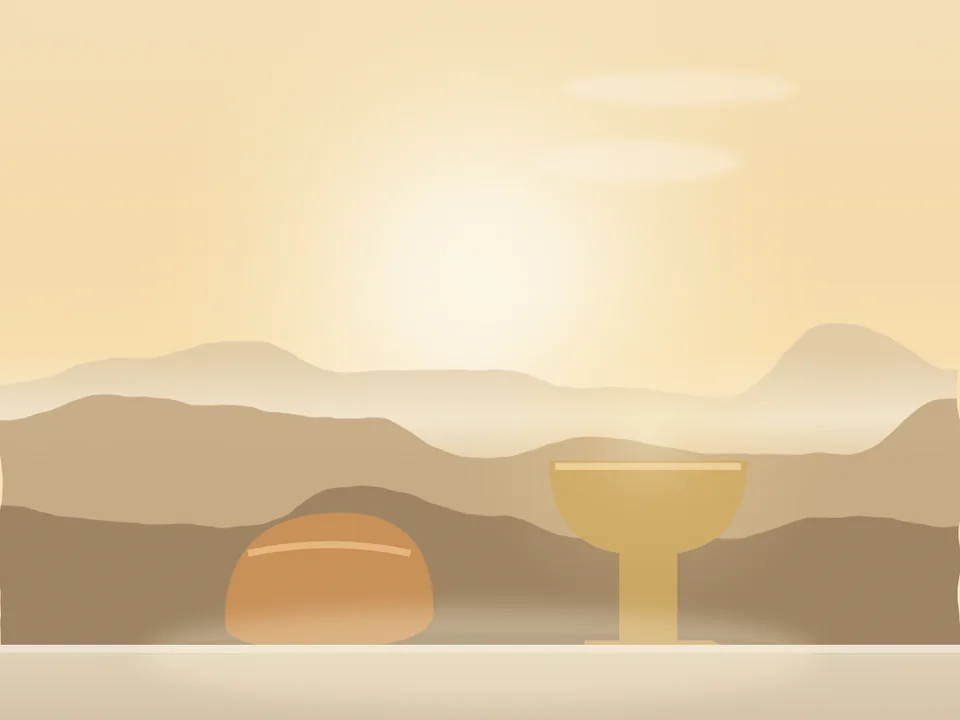
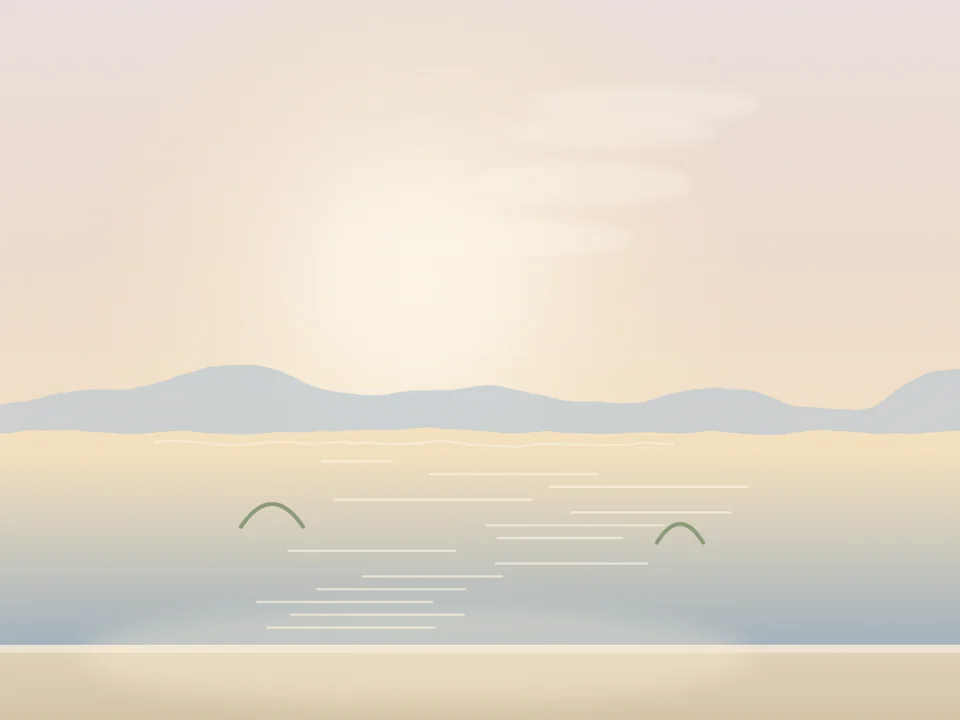
These three simple images were made by our team for visio divina practice. Choose one, take a few slow breaths and follow the steps above.

Is visio divina biblical?
Scripture often invites us to see. The psalmist longs “to gaze on the beauty of the LORD” (Psalm 27:4). Jesus told His followers to look at the birds and consider the lilies (Matthew 6:26-28). Creation itself declares God’s glory (Psalm 19:1).
Christians have different views about religious images. Some Protestant traditions are cautious because of the commandment against idols. The key is that in visio divina, you don’t worship the image. You use it as a window to help you focus on God, just as you might use a hymn or a sunset.
A short visio divina practice
Try this with Rembrandt’s Return of the Prodigal Son:
- Read Luke 15:20-24 first.
- Look at the painting for two minutes without judging or analyzing.
- Notice the father’s two hands. Some see one as strong and one as tender. What do they say to you about God?
- Find yourself in the painting. Are you the younger son, the older brother standing to the side or the father?
- Pray honestly about what you see.
- Rest in the Father’s embrace for a few minutes.
Visio divina for groups
Visio divina works well in small groups, retreats and classrooms. Show one image on a screen, guide the group through the steps with periods of silence, and then invite people to share (only if they wish) a word or detail that spoke to them.
Keep exploring
Try the Christian Meditation App
The Christian Meditation app includes guided visio divina sessions with public-domain sacred art, so you can pray with your eyes wherever you are.
 Download on the App Store
 Get it on Google Play
Frequently Asked Questions
What is visio divina?
Visio divina, Latin for “divine seeing,” is a way of praying with an image, usually sacred art, by looking slowly, noticing what draws your attention and responding to God in prayer.
What are the steps of visio divina?
Prepare, see, gaze, respond, rest and carry the image with you into your day. They mirror the movements of lectio divina.
Is visio divina Catholic?
It’s used widely by Catholics, but also by Anglicans, Orthodox Christians and many Protestants. It’s rooted in the broader Christian tradition of praying with Scripture and art.
What images can I use for visio divina?
Any image that helps you focus on God works: icons, classic paintings, photographs of creation or a simple cross. Public-domain art is easy to find and free to use.
Our Editorial Standards:
All our content on Christian meditation traditions, prayers, and spiritual practices is reviewed by Megan Ryder, PhD, ensuring theological soundness and spiritual depth.
We draw from centuries of Christian contemplative tradition, citing respected theological sources, biblical references, and established spiritual practices.
Our team understands that spiritual struggles are deeply personal. We approach topics of anxiety, strength, healing, and peace with compassion and biblical wisdom.
We continuously review and update our spiritual resources to ensure they remain relevant and aligned with orthodox Christian teaching.
Each article clearly identifies our writers and reviewers, along with the theological sources and biblical foundations used.
 To guarantee that all of our information is accurate, we ensure that all our sources are reputable. That means every source is authenticated and verified to be backed only by medical science.
Sources

Unless otherwise noted, Scripture quotations are taken from the Berean Standard Bible (BSB), which is in the public domain. https://berean.bible